Paella Rice in Valencia
Discover where Valencia’s most famous dish begins
Paella is known all over the world. But fewer people know where the rice traditionally used in Valencian rice dishes actually comes from. Just south of Valencia lies L’Albufera Natural Park, a landscape of wetlands, rice fields, canals and a large freshwater lagoon. Rice has been cultivated in this area for centuries and the surrounding countryside is closely connected with the origins of Paella Valenciana.
If you enjoy food, nature and local culture, Albufera is one of the most interesting places to visit during a trip to Valencia. And there is really only one way to finish the day: with paella in El Palmar.
Last updated: September 2026
Why is rice so important in Valencia?
Rice is part of Valencian culture. The crop was introduced to this part of Spain centuries ago, and the wetlands around Albufera provided ideal conditions for growing it. Today, rice fields still dominate large parts of the natural park. Depending on the time of year, the landscape changes completely. In spring and early summer, the flooded fields begin turning green. During summer, the rice plants grow tall and lush. Towards September, the fields gradually turn golden as the harvest approaches. After the harvest, many fields are flooded again, creating important winter habitat for waterbirds.
So when you eat a traditional rice dish in Valencia, you are tasting something that is deeply connected with the landscape around the city.
Where does Valencia rice come from?
Much of Valencia’s traditional rice culture centres around L’Albufera and the surrounding wetlands. The protected Arroz de Valencia Denomination of Origin recognises several rice types especially suited to local cooking. The three principal groups are:
Senia-type rice
Senia varieties absorb flavour particularly well and develop a softer, creamier texture. They are popular for traditional Valencian rice dishes because the grains take on the flavour of the stock very effectively.
Bomba rice
Bomba is probably the best-known Valencian rice variety internationally. It absorbs plenty of flavour but is comparatively resistant to overcooking, which makes it particularly useful for paella.
Albufera rice
Albufera is a more recent variety. It combines strong flavour absorption with a firm centre and is particularly appreciated for creamy and meloso-style rice dishes.
When shopping in Spain, look for packaging carrying the D.O. Arroz de Valencia quality mark.
Is Bomba the only rice used for paella?
No. Outside Spain, Bomba rice is often presented as the rice for paella. It is an excellent choice, but in Valencia itself you will find different locally grown varieties used depending on the dish and the cook. Senia-type varieties are highly valued because of the way they absorb flavour, while Bomba is appreciated for remaining firm and forgiving during cooking.
What matters most is using a short- or medium-grain rice that can absorb the stock without becoming unsuitable for the dry, even layer associated with paella. So if someone tells you that authentic Valencian paella can only ever be made with Bomba rice, the reality is a little more nuanced.
L’Albufera Natural Park
L’Albufera lies just south of Valencia. The landscape is made up of:
- a large freshwater lagoon
- extensive rice fields
- canals
- wetlands
- Mediterranean forest and dunes
- small farming and fishing communities
It is one of the most important natural areas around Valencia and feels completely different from the city centre only a short distance away. The lake itself sits at the heart of the natural park, while rice fields cover a large proportion of the surrounding wetlands. This relationship between water, rice farming and fishing has shaped the local food culture for generations.
Discover Albufera by bicycle
One of the nicest ways to experience Albufera is by bicycle. The terrain is largely flat and several routes pass through or alongside the rice fields. Cycling gives you time to notice how extensive the landscape actually is. You pass:
- rice paddies
- irrigation channels
- traditional farm buildings
- wetlands
- small villages
- birdlife
It also makes an interesting contrast with cycling through Valencia city itself.
👉🏻 Cycling in Valencia
If you are visiting during the hottest summer months, start early and take plenty of water. Spring and autumn are particularly pleasant seasons for cycling through the rice-growing landscape.
Take a traditional boat trip on Albufera
Another classic Albufera experience is a boat trip across the lagoon. Traditional flat-bottomed boats have been used here for generations by fishermen and local communities. Today, local boat trips allow visitors to experience the lagoon at a relaxed pace. They are particularly popular towards the end of the afternoon. And there is a good reason for that.
Sunset at Albufera
Sunset across the lagoon can be spectacular. Because the landscape is so flat and open, the evening light reflects across the water and surrounding rice fields. If your schedule allows it, combining paella in El Palmar with an afternoon or sunset boat trip is probably our favourite way to experience Albufera.
El Palmar: the village of rice and paella
In the middle of the rice-growing landscape lies El Palmar. Historically, this was a community of fishermen and rice farmers. Today, it is particularly famous for its restaurants. For such a small village, the number of places specialising in rice dishes is remarkable. Menus commonly include:
- Paella Valenciana
- arroz a banda
- seafood rice
- arroz negro
- other dry and creamy rice dishes
- all i pebre, the traditional local eel and potato dish
El Palmar is therefore one of the most logical places to eat paella if you want to understand the landscape where the dish developed.
What is authentic Paella Valenciana?
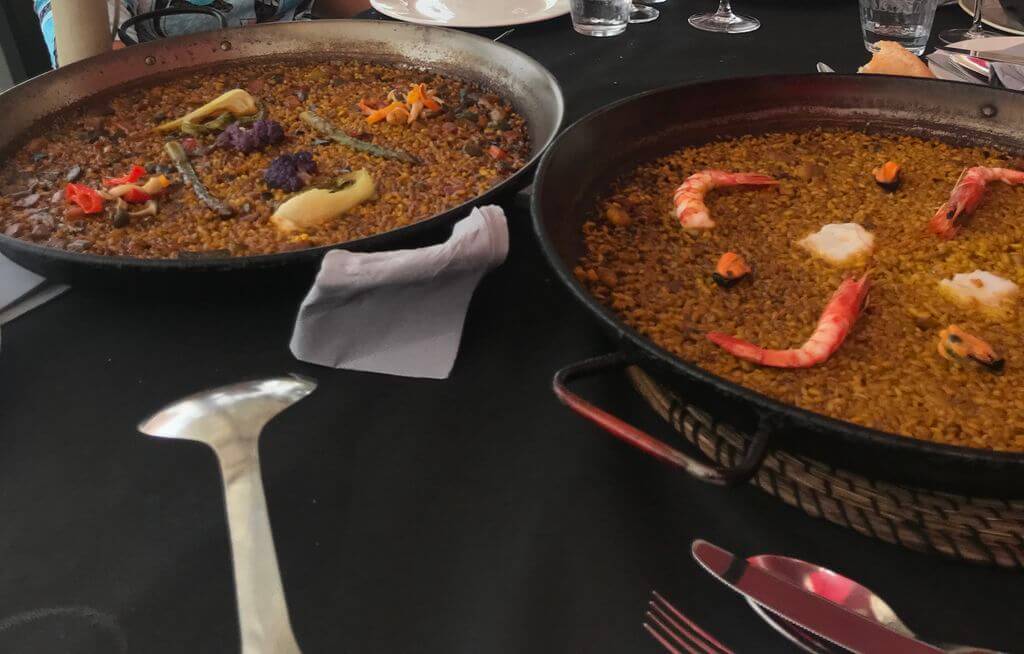
This is where visitors are sometimes surprised. Traditional Paella Valenciana is not necessarily the seafood paella that is often served in tourist resorts outside Valencia. A classic Valencian version traditionally contains ingredients such as:
- rice
- chicken
- rabbit
- garrofó beans
- green beans
- tomato
- olive oil
- paprika and seasoning
Recipes vary slightly between families and areas, but seafood does not normally form part of traditional Paella Valenciana. Of course, Valencia has many excellent seafood rice dishes. They are simply different dishes.
Why was paella created around Albufera?
The answer is largely practical. People working in the countryside cooked with ingredients they had around them. There was:
- locally grown rice
- vegetables from the surrounding agricultural land
- rabbit and poultry
- water
- firewood
A wide, shallow pan allowed the rice to cook evenly over a fire. Over generations, a simple countryside meal developed into the dish now known around the world. That is why visiting Albufera adds context that you simply do not get from ordering paella in a restaurant in another country. You see where the rice grows.
What is socarrat?
If you order a good dry rice dish in Valencia, you may hear the word socarrat. This is the thin, toasted layer of rice that forms on the bottom of the paella pan towards the end of cooking. When done correctly, it is crisp and intensely flavoured rather than burnt. For many Valencians, the socarrat is one of the best parts. Do not be surprised if people around the table compete for it.
When do Valencians eat paella?
Traditionally, paella is a lunch dish. This is one of the easiest ways to spot the difference between local customs and tourist-oriented dining. Families often eat paella together at lunchtime, particularly at weekends and on Sundays. El Palmar can therefore become very busy on Sunday afternoons. If you specifically want to eat there at the weekend, reserving a table in advance is sensible. And do not plan a rushed lunch. A proper Spanish Sunday lunch has very little interest in your afternoon timetable.
Combine paella with a visit to Valencia
If you are staying in Moraira, we would not necessarily drive to Albufera only for lunch. Combine it with Valencia. For example: Valencia Old Town · Turia Gardens · Albufera · boat trip · paella in El Palmar or Cycling in Valencia · Albufera rice fields · paella lunch · sunset at the lagoon
👉🏻 Things to Do in Valencia
👉🏻 Cycling in Valencia
And after returning to Valencia, there is another local speciality worth knowing:
👉🏻 Discover Agua de Valencia
That gives you a very good introduction to Valencian food and drink in a single day.
Can you visit Albufera from Moraira?
Yes. Albufera lies south of Valencia, so from Moraira you should treat it as a full-day excursion rather than a short local trip. The most enjoyable option is to combine the nature park with Valencia itself. If food is your main interest, plan the day around a lunch reservation in El Palmar. If nature interests you more, allow additional time for cycling, walking or a boat trip. Either way, it offers a completely different experience from the Mediterranean coastline around Moraira.
Staying in Moraira?
Moraira Holiday Homes has specialised in holiday accommodation in Moraira and nearby Benissa Costa since 2004. From Moraira you can enjoy the relaxed atmosphere of a smaller Mediterranean town while still taking day trips to Valencia, Albufera and many other places along the Costa Blanca.
Our collection includes private villas with swimming pools and sea views, as well as apartments and penthouses in Moraira town centre. Because we live locally, we are also happy to share our favourite places and experiences during your stay.
👉🏻 Explore our holiday homes in Moraira
Frequently Asked Questions about paella rice in Valencia
Where does the rice for Valencian paella come from?
Much of Valencia’s traditional rice culture is centred around the wetlands and rice fields surrounding L’Albufera Natural Park, south of Valencia city.
Is Albufera where paella originated?
Albufera and the surrounding agricultural landscape are widely regarded as the birthplace of Valencian paella. Rice farmers and agricultural workers used locally available rice, vegetables and meat to prepare the dish.
What rice is best for paella?
Bomba rice is internationally well known, but it is not the only Valencian rice used. Senia-type and other locally protected varieties are also highly valued for traditional rice cooking.
What is Bomba rice?
Bomba is a traditional short-grain rice variety grown in Valencia and other parts of Spain. It absorbs flavour well while remaining relatively resistant to overcooking.
What is Albufera rice?
Albufera is a Valencian rice variety valued for absorbing flavour while retaining firmness. It is especially popular for creamy and meloso-style rice dishes.
Where should you eat paella near Valencia?
El Palmar, in L’Albufera Natural Park, is one of the most traditional places to eat Valencian rice dishes. The village has numerous restaurants specialising in paella and other rice recipes.
Does authentic Paella Valenciana contain seafood?
Traditional Paella Valenciana is normally made with ingredients such as chicken, rabbit, green beans and garrofó beans rather than seafood. Valencia also has many separate seafood rice dishes.
Is paella eaten for lunch or dinner in Valencia?
Traditionally, paella is mainly eaten at lunchtime. Sunday lunch is particularly popular, especially in places such as El Palmar.
What is socarrat?
Socarrat is the toasted layer of rice that forms on the bottom of the paella pan. When cooked correctly, it becomes crisp and intensely flavoured.
Can you take a boat trip on Albufera?
Yes. Traditional boat trips operate on the Albufera lagoon and are a popular way to explore the natural park, particularly around sunset.
Can you visit Albufera from Valencia by bike?
Yes. Cycling is a popular way to explore the natural park and rice fields. The flat landscape makes it particularly suitable for recreational cycling.