Ceciie Groenwold19 October 2026
We hebben heerlijke dagen in El Nido…
We hebben heerlijke dagen in El Nido gehad met ons gezin 7 volwassenen en 1 baby. Alles was aanwezig, zelfs boeken en spelletjes. Het zwembad was heerlijk en de buitenkeuken...
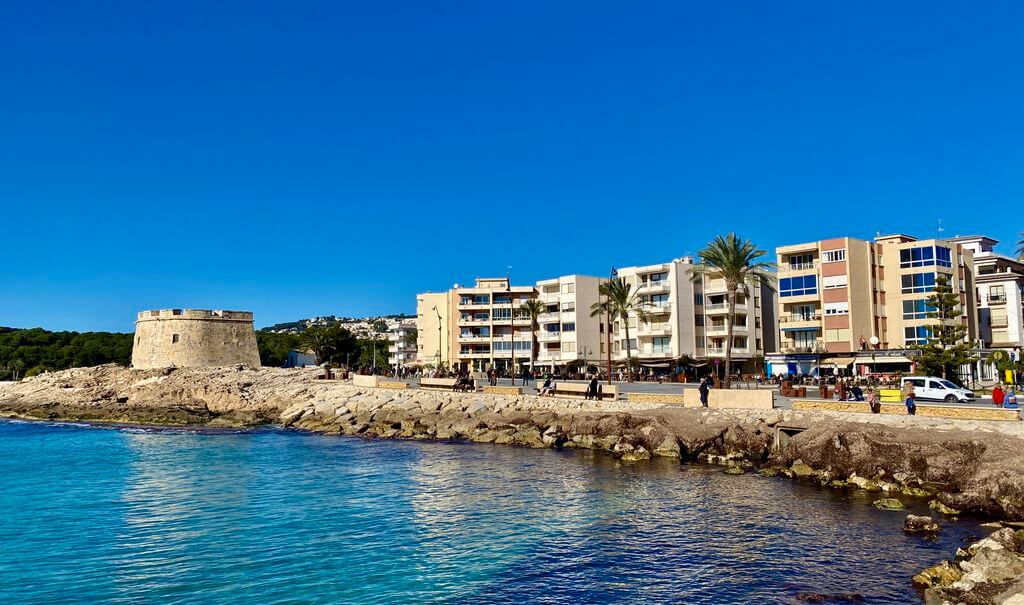
Moraira and Teulada form one municipality, but their histories developed in very different ways. Teulada grew inland and was traditionally closely connected with agriculture, vineyards and the local Moscatel grape. Moraira developed later on the coast around fishing, its harbour and the need to defend the coastline. Today, Moraira is best known as a holiday destination, but the history of this part of the Costa Blanca goes back many centuries.
| Period | What happened? |
| Ancient times | Iberian and Roman communities lived in the Marina Alta |
| Moorish period | Agriculture, terraces and local place names were strongly influenced |
| 13th century | The area came under Christian rule after the arrival of Jaume I |
| 1377 | Teulada gained municipal independence |
| 1386 | Teulada received its own municipal territory |
| 1410 | Sant Vicent Ferrer visited Teulada |
| 16th–17th centuries | Teulada and the coast were fortified against attacks by Barbary corsairs |
| 18th century | Moraira Castle was built and a permanent coastal settlement developed |
| 19th century | Moraira continued growing around fishing and the harbour |
| 20th century | Tourism gradually replaced agriculture and fishing as the main economic activity |
Teulada lies several kilometres inland and is the historic heart of the municipality. For centuries, everyday life revolved around agriculture. Grapes, raisins and later Moscatel wine became particularly important, and vineyards are still part of the surrounding landscape today. Teulada gained municipal independence in 1377 and its own territory in 1386.
Another important moment came in 1410, when the Valencian preacher Sant Vicent Ferrer visited Teulada. He later became the town’s patron saint and remains an important part of local traditions.
One of Teulada’s most important historic buildings is the Iglesia-Fortaleza de Santa Caterina. During the 16th century, settlements near the Mediterranean coast were frequently threatened by Barbary corsairs. The church therefore needed to serve not only as a place of worship, but also as a refuge for the local population.
In 1562, Italian military engineer Giovanni Battista Antonelli advised that Teulada’s defences should be reviewed and that the church should be further fortified. The present church-fortress was developed over several decades and remains one of the clearest reminders of this period.
Defending the coast also meant spotting approaching ships as early as possible. Above El Portet stands the Torre del Cap d’Or, a 16th-century watchtower built on the headland overlooking the Mediterranean. From this strategic position, guards could watch the coastline and raise the alarm if hostile ships approached. The round tower has no entrance at ground level. Access was originally by a ladder that could be pulled up for protection.
Today, you can walk to the tower from El Portet and enjoy one of the best viewpoints around Moraira.
Moraira’s best-known historic landmark stands beside Playa de l’Ampolla. The Castillo de Moraira was built in the 18th century as part of the coastal defence system. Above the entrance is the Bourbon coat of arms together with the year 1742, generally associated with the completion of the fortress.
Its shape is unusual: viewed from above, the castle resembles a horseshoe. The defensive walls are around ten metres high and the building originally contained openings for artillery. The castle was extensively restored during the early 1980s and is now one of Moraira’s most recognisable landmarks.
After Moraira Castle was built, a more permanent settlement gradually developed along the coast. Fishing became an important source of income and Moraira grew around its small harbour and maritime community. Teulada, meanwhile, remained much more closely connected with farming, vineyards and the inland countryside. That difference is still easy to recognise today: historic Teulada inland and maritime Moraira beside the Mediterranean.
In the centre of Moraira stands the Iglesia de Nuestra Señora de los Desamparados, also known in Valencian as Mare de Déu dels Desemparats. The church dates from the late 19th century and was closely linked to Moraira’s fishing and seafaring community. It was later enlarged as the town grew.
Until well into the 20th century, agriculture and fishing were the main economic activities in Teulada-Moraira. That began to change as the Costa Blanca became increasingly popular with Spanish and later international visitors. During the second half of the 20th century, more villas and holiday homes were built around Moraira and tourism gradually became the area’s main economic activity.
Despite that growth, reminders of the municipality’s past are still everywhere: the fishing harbour, Moraira Castle, the vineyards and the historic streets of Teulada.

If you would like to see some of Moraira’s history for yourself, start at Moraira Castle and walk along the coast towards El Portet. If you have more time, continue from El Portet up to the Torre del Cap d’Or. But for the oldest and most historic part of the municipality, we also recommend visiting Teulada’s old town. It shows a very different side of local history from the coastal resort you see today.
Are Moraira and Teulada two different towns?
Yes. Teulada lies inland and Moraira is on the coast, but together they form the municipality of Teulada-Moraira.
Which is older, Teulada or Moraira?
Teulada developed much earlier as a permanent settlement. Moraira grew later around coastal defence, fishing and its harbour.
When was Moraira Castle built?
Moraira Castle dates from the 18th century. The year 1742 appears above the entrance and is generally associated with the completion of the fortress.
Why are there old defensive buildings around Moraira?
Between the 15th and 17th centuries, this part of the Mediterranean coast was repeatedly threatened by Barbary corsairs. Watchtowers, fortified churches and coastal forts were built to protect the local population.
How old is the Torre del Cap d’Or?
The Torre del Cap d’Or dates from the 16th century and formed part of the coastal warning and defence system.
Was Moraira originally a fishing village?
Yes. As a permanent settlement developed on the coast, fishing became one of Moraira’s main sources of income and helped shape the character of the town.
Where does the name Moraira come from?
The exact origin is uncertain. There are indications that the names Teulada and Moraira may have older, possibly Roman origins, while the Moorish period also left a strong influence on local place names and the landscape.
When did Moraira become a tourist destination?
Tourism expanded particularly during the second half of the 20th century. Farming and fishing gradually became less important as holiday homes, tourism and services grew.
What are the main historic sights in Moraira and Teulada?
Moraira Castle and the Torre del Cap d’Or are the best-known sights on the coast. In Teulada, the historic old town and the fortified church of Santa Caterina are particularly worth visiting.